Me and my anxiety

It’s difficult to explain to those who do not have anxiety what it’s truly like for those of us who do. Most folks know what it’s like to feel anxious. Butterflies in your stomach, your heart racing, maybe your palms get sweaty – a general feeling of anticipation that makes you feel unsettled in the moment.

Generalized anxiety disorder is different. For me, it is an undercurrent of that anxious feeling paired with an incessant narrative in a voice that is my own and isn’t – one which is quick to think of the worst case scenario for any occurrence, which tells me that the things I know and feel in my heart are to be questioned. My anxiety is very pronounced when I am in the car and someone else is driving; I feel a sense of impending doom with every merge, every uncontrolled left turn. The narrative in my mind tells me that at any second, another vehicle or a slip of the driver’s attention will bring an end to everything I know and love. When I travel to the land currently known as California, the place of my birth and where I spent most of my life, I am constantly on edge waiting for “the big one” to hit – the giant earthquake that I spent my childhood hearing about and preparing for with earthquake drills. I will be standing on a hilltop looking down & around at a beautiful vista, and in my mind’s eye I see the earth around me undulating, the trees swaying, buildings crumbling. All while at the same time, feeling gratitude and love for the beauty of the world around me.

Anxiety is not an invited feeling. It arrives even when you feel peace, happiness, safety. Yes, anxiety can be triggered by certain unwelcome events, but it also shows up when nothing has specifically triggered it. Those of us with anxiety can feel it when we’re on vacation, when we’re enjoying a birthday celebration, when we’re at a family gathering. It is often unrelated to our physical environment. The thing that those with anxiety have to learn to navigate, and those without anxiety have to learn to accept, is that anxiety is not a reflection of reality. The inner dialogue doesn’t care if you are physically safe, if you are surrounded by loved ones, if you are in a beautiful place. It can be kept at bay by self affirmations and supportive words from your loved ones, but when it’s really bad it can make it difficult to believe yourself and others about what is reality. It often doesn’t make any sense, and that’s what makes it difficult for those who don’t have anxiety to understand and empathize with those of us who do.

One of the best and only examples that I have seen of anxiety in media is on Issa Rae’s Insecure. I’m not sure if it’s intentional, but it feels as though it must be. There are multiple ways that the show depicts characters’ anxiety and anxious thoughts & feelings. One way is with flash forwards – scenes that seem real to start, then become very exaggerated versions of reality before flashing back to Issa’s character in the present, who was imagining the worst case scenario in a conversation she is anticipating or an action she is considering. This is a great example of what it’s like, to imagine a reality completely different from the one we know, where all of our worst fears come to fruition.
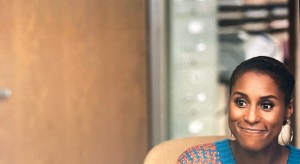
A frame from the TV show Insecure, showing the main character, Issa, from the shoulders up, off-center against a plain background.
A frame of Issa Rae’s character in Insecure

Another way is through cinematography – they frame a shot of a character so that the center of the frame is not their face, but instead a blank space that is meant to represent all of their unstated thoughts. This technique depicts why those of us with anxiety can seem to lack presence when we are around others, because so much of our mental capacity is spent on the inner dialogue of things we are too afraid to say out loud.

My anxiety is very different from my otherwise very logical and process-oriented brain. I will hear an odd sound in the night and my anxiety will convince me that it’s an intruder come to destroy everything I know and love, before I realize that it’s just the deep snores of my dog, or the ceiling fan, or the wind. What is often said and written about anxiety is that your brain and your body don’t know the difference between a real and a perceived threat. I have found that to be very much true. In those moments where I am convinced that a strange sound is death knocking at my door, my heart is racing, my jaw is clenched, my entire body is stiff waiting for the next sound that will confirm that the threat is real. Even after realizing that there is no threat, it can take several more minutes for my heart to stop racing, and for my mind and muscles to relax enough to let sleep take over.

I’ve seen recent posts on social media that claim that anxiety is beneficial, a survival instinct that we have refined over millennia, which can keep the anxious one safe or sound the alarm when something feels “off.” My anxiety has certainly helped me in some ways. It made me a great student and test taker, as I would cope with my anxiety by reading incessantly and consuming every piece of learning material accessible to me, so that by the time I sat down for a test I felt confident in my knowledge. My anxiety makes me a great employee – I am constantly thinking that I’ve missed something or forgotten something, so my organizational systems are robust and effective. I am good at thinking ahead to all of the possibilities for a given project, pilot, or organizational change, and trying to understand how other people might be affected. My anxiety makes me detail-oriented, thorough, and direct – traits which are for the most part rewarded in U.S. workplaces.

Beneficial, though? I would give up my anxiety in a second if I could. My anxiety disturbs my peace and impacts my relationships. It makes it difficult for me to build new relationships, to be present, to be confident. I am constantly working on being better at these things and confronting my anxiety, because it tells me that I am not worthy or deserving of others’ time and attention.

My anxiety is the main reason why I started therapy a couple of years ago. I finally recognized and labeled my anxiety, and began cognitive behavioral therapy, a common treatment for anxiety. I talk with my therapist about my anxiety, how it’s affecting my life, and I learn ways to manage and work with it. I try to maintain a meditation practice, and though I’m not very good at it, I at least have that in my toolbox to turn to in moments when I am feeling overwhelmed by my anxiety. I am getting better at recognizing my anxiety, interrupting the narrative, and letting go of the fear. I know that there are medications that I can take to treat my anxiety, but I prefer to learn how to manage it on my own, and I am grateful that my anxiety is very rarely debilitating. Writing is another way that I manage my anxiety. When I write I come back to myself, I tap into the voice in my head that is my own.

After recognizing and accepting my anxiety, then learning ways to work with and through it, I am feeling ready to move onto exploring the root causes of my anxiety. Understanding where my generalized anxiety disorder came from, and doing the work to heal my inner child, is the next great adventure on my mental health journey. I know that there isn’t a cure for my anxiety, and have accepted that this is a part of who I am. But I am determined to live my life joyfully and fearlessly, and to stop letting my anxiety control my actions, my time, and the way I see myself.

On doing your dreams

Today is my Mars return, an event that happens approximately once every two years, when Mars returns to the place where it was on the day you were born. It is a day when you can tap into Mars’ power and energy, and channel it into whatever endeavor that you feel most driven to. This could be work, a creative project, your sex life, etc. I am starting with this because I took today off from my “day job,” or the work that I do in exchange for a living wage, in order to have time and space to channel this energy into working on a writing project. I am starting, instead, with this blog post. It has been a while since I last shared on this platform, and the reason for this pause is that I found myself pushing myself to write about things that I didn’t really want to write about, and so I just didn’t do it. It is also because I have started a long-term writing project that I am very excited about and which is taking up a lot of my “free” time. But today, I want to start my Mars-driven writing spree with this reflection on doing your dreams.

Do you remember the first thing you ever said in response to the question, “what do you want to be when you grow up?”

If not the first thing you ever said in response to that question, then the first thing you really gravitated to, the one you stuck with and repeated to yourself, perhaps until you reached adolescence?

For me, it was a singer/songwriter. I wanted to be like Selena, the icon, the Mexican-American girl from humble Texas roots who changed the world with her powerful voice. I wanted to write songs about love – feeling love, yearning for love. Cute, catchy, poppy songs about love. The first one that I wrote was in a Barbie diary with a lock, a birthday gift from a family member, and it was titled, “Somewhere, Somehow.” I was 7 or 8 when I wrote this ballad about the boy I had had a crush on in my first grade class in San Jose, CA, where I no longer lived. I would gaze up at the moon, like movie-Selena does in the film, Selena, and picture myself on a stage. I held onto this dream until I was maybe 11 or 12, after I had seen more of the world and of humanity, and realized that life was more complex than first grade crushes.

I wonder why adults ask children that question at such a young age. Had I not been asked the question until I was a bit older, what might my initial response have been? After songwriter came journalist. I had started writing poetry but I told myself that it simply wouldn’t be possible for me to achieve the upward socioeconomic mobility that I sought through poetry, and that journalism was a great way for me to get paid to write. I also believed that it would give me the opportunity to write about the many wrongs that I saw in the world, to bring society’s attention to them, and in doing so, solve them. I stuck with this dream from the ages of 13 to 20, when I was getting ready to graduate from Journalism school, and had finally become so disillusioned with the media that I thought I should dedicate myself to critiquing and transforming it, instead.

And then I started working full-time. I told myself I would pursue stories as an independent reporter in my free time, imagining that I would have so much of it compared to my life as a full-time student and slightly-more-than part-time administrative support student-worker. I told myself I would only do the enrollment counselor gig – the first offer I received after graduating – until I got into a graduate program on media studies. I imagined I might go on to be a professor at a prestigious university, where I would spend my days convincing young, privileged minds that the media was a tool of white supremacy and that it must be reconstructed.

Then, in the spring of 2015, less than a year after I graduated from college, a couple months after being rejected by multiple doctorate programs (I honestly thought I could skip a master’s…), came a realization. An understanding that had been several months in the making, but came to fruition in a moment. I was listening to the This American Life episode, Three Miles, sitting at my desk in the enrollment marketing office, processing data on the thousands of students applying to ASU’s online programs, when I was struck by the understanding that the education inequity that is described in that episode, exists everywhere, and sometimes even within closer distances. I realized that in my high school, as I was being challenged and intrigued by my excellent education in Honors & AP classes, three doors down my classmates were receiving a sub-standard education, with classrooms led by teachers who were not invested in their success.

I realized this because I had spent my junior year of high school in a “college prep” English class due to a clerical error, as I had enrolled in my school’s AP English Language & Composition class, but was told there wasn’t enough room. For a year I rolled my eyes in English, in a classroom that was more poor and more diverse than my AP/Honors classrooms, who were treated as sub-human by the teacher, who was actually the school’s athletic director, and who was either not there or would leave in the middle of class 3 – 4 days out of the week. I was so frustrated by the curriculum, which was closer to my 7th grade GATE English class than what my friends were learning a few classrooms away in AP English. I thought, 5 years later, as I listened to that This American Life episode, that this was the wrong that I must right. A year after that episode aired I had quit my enrollment counseling job, moved to California for a brief, failed attempt to enter the EdTech industry, and was getting ready to move back to Arizona to start working at one of the largest education-focused nonprofits in this stolen land.

For a few years I dreamed of starting my own non-profit dedicated to solving the education inequity issue, I even dreamed of one day being appointed Secretary of Education, where I would be in a position to influence broad-sweeping legislation that would once and for all make access to an excellent education a right guaranteed to all.

But I work, full-time, making money for someone else, earning a comfortable living wage. I have undertaken debt in order to secure this comfortable living – financed the portion of my college education that wasn’t covered by grants & scholarships, financed a decent car, took out a mortgage to purchase a home. And the neverending bills keep me tied to this need to keep the money coming in. I certainly never dreamed, as a child, of spending the majority of my waking hours training fundraisers on how to use Salesforce, day after day. This white supremacist, patriarchal, capitalist system in which we live is not very forgiving to the dreams of children.

Several months ago I had a birth chart reading with Yakari Gabriel Torres, writer, astrologer, and Director of Stari Agency. Within minutes of seeing my chart for the first time, Yakari told me that there is nothing stopping me from writing, and that for me, writing was the easiest thing in the world. She said, during that reading, that what we dream of doing as children is often aligned with what we were born to do.

I can just imagine what this world might be like without this system of global white supremacist patriarchal capitalism pushing so many of us to sacrifice our dreams for the sake of surviving, for the sake of having a place to sleep at night and food to eat. What might our collective efforts, channeled toward what we are each born to do, have brought into being? Instead, for over 500 years, humanity has been pre-occupied with this global, exploitative system. It began with European men stealing land, labor, and lives in order to secure all the resources the Earth had to offer. And it has us here, trapped in a vicious cycle of giving our time and energy in exchange for a paycheck, taking home a portion of the wealth that we build for other people.

I want to be brave enough to do my dreams. I have witnessed my husband go through so much change, take so many chances with his career, in order to move ever closer to his dream of helping his community build wealth through real estate. I have witnessed my best friend put herself out there, make connections in a new community, go after her worth, in order to move ever closer to her dream of building a more just world. I have witnessed another close friend move clear across the country, away from his family, to pursue his dream of acting and performing.

I am pushing myself now to do my dreams. I no longer dream of writing songs, but I dream of writing books. Books of poetry, non-fiction books about my life and my family, science fiction novels. I dream of writing television shows and movies, and seeing my characters come to life on the screen. I dream of a life that is safe, full of love and comfort. I dream of having time to teach my children and watch them grow.

This year I am challenging myself to do my dreams, to believe for the first time since I was a little girl that I truly can do anything I set my mind too. I am challenging myself to trust that I will attract all of the abundance that I need to live the life that I desire. I am challenging myself to break free from this mindset that I must sacrifice my joy for the sake of my survival.

A round table decorated with dried lavender flowers, a succulent arrangement, tealights, glass champagne flutes, and lavender napkins.

Making it through one year of marriage in a pandemic

As March approaches, the world is marking one year of being in a pandemic, and I am marking one year of marriage. My partner and I became husband and wife on February 29, 2020; a gorgeous, sunny day on which we were able to gather under the sky with our friends and family to celebrate. While we’ve been together for 8 years now, this last year – our first married, spent almost entirely in a pandemic, has been both one of the most challenging and the most enriching.

To be completely honest, there were times when I wondered if we would make it. Yes, I loved this man enough to want to spend my life with him, but did I love him enough to spend all day, every day, confined to our house together, for an indefinite amount of time? I wasn’t sure. Pandemic life isn’t the life that any of us signed up for. And living together, when you each have your own work schedules and routines and lives that take place away from home, is much different from living together when you both work and sleep and eat and recreate in the same 1000 or so square feet. When, if you leave the house and spend time around other people, you’re risking your life and/or the lives of the people around you.

We have made it, so far. I know this pandemic life isn’t nearly over, but I’m pretty proud of how we have grown in love and in life through this past year. I know that it’s an unpopular opinion for me, as a millennial cis-woman, to be happily married, to a millennial cis-man. So many articles and even recent Twitter threads have shown that married cis-women in heterosexual relationships are having a horrible time right now. Cis-men have been happy to sit back and allow their cis-women partners to take on the majority of the cleaning, cooking, child-rearing responsibilities, even when they don’t work as much, or at all.

While my husband isn’t perfect (nobody is, perfection is a myth rooted in white supremacy), he at least understands the importance of cleaning up after yourself and sharing the responsibilities of nourishing and maintaining a household. Pre-pandemic, my husband would wake up every weekday, get ready for work, make coffee, sometimes a smoothie, occasionally boil a few eggs, and grab the dinner leftovers that he had packed for lunch before leaving to work for the day. I would eat whatever I wanted for breakfast as I started my work day at home (I’ve worked from home for nearly 4 years now), heat up leftovers, or make a salad or a sandwich for lunch, and cook dinner throughout the week. I washed whatever dishes I used during the day, and my partner usually cleaned up after dinner. It felt easy, fair, and I love to cook, so being mainly responsible for the main meal of the day was no problem.

When the pandemic began, and my husband started working from home as well, things changed. He struggled with work-life balance before, and when the line between work and home became completely blurred, that balance was non-existent. His morning routine changed from getting up, getting ready, and helping with breakfast, to getting up, walking to his desk in our second bedroom, and starting his work day. At first he marveled at the fact that not needing to commute meant he could spend more time working. He is a mortgage loan originator, and with record low interest rates on mortgages, he has had plenty of work to do and could easily work 60+ hours per week. I, in our honeymoon phase in the first several weeks of the pandemic, was okay with making breakfast and lunch and taking it to him at his desk – for a time. Fairly quickly, though, I realized that if I didn’t have time to make coffee, or breakfast, or lunch – he wouldn’t. There were multiple days where I would just grab something quick and eat at my desk, and he wouldn’t eat anything at all until 1:00 or 2:00 pm.

What had felt like an evenly shared responsibility before, had become entirely my responsibility – to figure out what the heck to eat 3 times a day, 7 days a week. Every week. I found myself doing 100% of the cooking, but also washing about 50% of the dishes. By mid-summer we came up with a solution. My husband found an affordable, local, meal prep service, and suggested we order meals to make this task a little easier. I was reluctant at first, but the meals were decent and I relented to the fact that it is okay to accept help, especially in the middle of a pandemic. We began ordering 8 meals per week from them, taking the place of 4 lunches and/or dinners. When I say affordable, I mean affordable, like $50 – $60 per week for the meals, which cut our grocery bill in half to $45 – $50 per week. My husband makes coffee and a smoothie, boiled eggs, or toast for breakfast, we take turns making/heating up lunch throughout the week, and I cook dinner two to three days during the week. We support local restaurants on the weekends, and spend some time meal prepping together on Sundays. I take care of the breakfast and lunch dishes, and he takes care of the dinner dishes. All of this has helped this task return to being a shared responsibility. It’s also helped us eat healthier meals, makes keeping the kitchen clean relatively painless, and prevents arguments rooted in unspoken resentment about who’s not carrying their weight.

Cooking and dishes aren’t the only things that became challenging, of course. Having no alone time has been difficult for me, a super introvert who needs to spend a lot of time just doing my own thing. Not being able to hang out with friends (without risking our lives or the lives of those around us) has been difficult for my husband, a super social ambivert who has a very close group of friends, who are like family. So I manufacture alone time while he manufactures connection. Specifically, he got a PlayStation and started playing Call of Duty online with his friends on the TV in our second bedroom. He works way more hours than I do, so I get enough time to myself throughout the week, and on weekends I am perfectly happy with him playing video games for a few hours while I watch my shows or listen to podcasts or write or read or do a home organizing project.

Making intentional time to be present together has been essential as well. From taking our fur-child Bernie on walks together every afternoon during the week, without phones, to finding ways to spend time together beyond watching TV or cleaning. We’ve worked on puzzles together, played a conversation card game, or two-person board games like Scrabble and Rummikub. On the weekends, our pandemic-friendly outings consist of picking a park to drive to for a walk or a hike, occasionally picking up takeout to eat at the park. Even making the bed together in the morning, or playing with Bernie before we go to bed at night, have been opportunities for us to have quality time even when we are around each other all of the time. We still watch TV together, of course, we are millennials and I truly enjoy film and television as art forms, but making time to spend engaging with just each other has helped us continue to communicate, get to know each other, and deepen our bond.

It was also important for us to have some conversations we hadn’t had before, even in 7+ years of being in relationship with one another. Binding ourselves together legally and financially required us to have frank conversations about how we manage our income, how much debt we had, our expenses, what our financial goals are. Early in April we sat down and talked through what we wanted to accomplish in the next few years, ensuring we were clear on how we wanted to be in partnership with each other, and what it would take from both of us to get there. And we’ve continued to have those conversations, as the need to make financial decisions and choices has come up. Knowing that we’re aligned here has helped to alleviate stress when the possibility of layoffs came up at work, and as we’ve dreamed together about where we want our careers to go in the next few years.

Then there were the conversations about racism and white supremacy that happened in many households beginning last summer. I have been thinking and talking about dismantling white supremacy for several years, and dragging my husband along the way. But the movement for Black lives and against police brutality, and the campaign of the former president of the U.S., provided so many more opportunities for both of us to confront the ways in which we’ve benefited from white privilege, and how we were operating in ways that were “not racist”, and not antiracist. These have been some of the most tense moments, when I realized that, while we had been having conversations here and there, it was as though we had been speaking different languages.

While I had been listening to podcasts, reading, and learning through Diversity, Equity, and Inclusiveness work at my job over the last 3+ years, he was mostly living life in the oblivious way that many not-racist white men do. This movement for racial equity forced us to get on the same page about needing to be actively antiracist, about how we must dismantle the beliefs rooted in white supremacy culture within ourselves, how to support each other in doing so in productive ways, and provided the opportunity for us to get clear on how, if we have them, we intend to raise our children. It was difficult at first, heartbreaking at moments, but eventually we arrived at a place where we recognized how much there remains for each of us to learn, and concluded that we must do it together. When he started questioning why I was watching The Crown (“isn’t this white supremacy?”), I realized this is both a blessing and a curse.

And through it all, therapy. Phone appointments with my therapist help me get out of my head for a bit, and learning how to manage my anxiety in healthier ways has helped me improve immensely at communicating my needs, understanding what is at the root of my reactions, and inviting my partner in on my healing. It has even helped him understand more about the ways in which he needs to heal as well.

Of course, I must recognize how much privilege is present here. We are both employed, in jobs that pay a comfortable living wage and allow us to work from the safety of our home. We do not have children, and I firmly believe that having access to contraception and reproductive healthcare, in a country without universal healthcare, is a privilege. Having access to therapy is also a privilege. Not having any underlying conditions, and not being within a demographic that puts us at greater risk in this pandemic, are privileges. Even living near enough to relatives to have been able to see family a handful of times over the course of the year feels like a privilege right now. While several people close to us have gotten sick with COVID-19, some of them incredibly so, not one of the over 500,000 individuals who have lost their lives to this virus in the U.S. has been someone who we have had to mourn.

It certainly hasn’t been easy, but having a caring and loving partner who is ready and willing to grow with me has kept me going over this last year. As we approach our wedding anniversary, I am filled with joy and gratitude at having chosen this incredible person to spend my life with, and filled with excitement for the dreams that we’ve been dreaming together. While I look forward to the days when we can enjoy fulfilling social lives once again, I have truly cherished this opportunity to spend time learning how to love one another even more fully.

One year of COVID-19 in my community

It has been 366 days since the first case of COVID-19 was identified in my community. The evening of January 26, 2020, Arizona State University confirmed that the first case of the novel coronavirus detected in Arizona was within the university community – a student on the Tempe campus, and they were quick to assure the community that the student had not been in university housing, and was in isolation.

I saw this news on Twitter late that night, and as I went to bed I thought about all of the people who had been on the flight that brought that student to Phoenix, I thought of the potential Uber or Lyft driver who picked them up from the airport, I thought of the potential people at the grocery stores, restaurants, and other places where that student had been before they knew they were carrying the virus. The university announcement had indicated that they were working with the Maricopa County Department of Public Health to complete contact tracing, and that individuals who may have been exposed would be contacted. But what about all of the people anonymous to that student who could have been exposed?

The morning of January 27th, I woke up thinking about this. I turned to my then-fiance, now husband, and told him – coronavirus is here. I had that day off of work, and as I drove around town running errands, I found myself at a red light behind a sports car, with a license plate that was 5 letters: WUHAN. Having attended ASU, and having lived within a handful of miles from ASU’s Tempe campus for most of the last 8 years, I know that there is a large community of international students drawn to Tempe for and by the university, and I am used to seeing the flashy sports cars of the wealthiest among those students around town. In that moment it struck me – they identified one case, but there were surely others who had been going about their lives after returning from their holiday travels.

It was easy enough to brush aside that thought as anxiety, and move forward through my day in the carefree way we used to before the pandemic began in earnest. That evening, I gathered with my family at a restaurant to celebrate my grandma’s birthday. As we sat around the table, the fact that she would be 75 in 2021 came up. We talked briefly about where we should go on a trip to celebrate, as some of us had gone to Hawaii to celebrate her 70th birthday. A conversation that I’m sure we all forgot about within the next couple of months.

Less than two weeks later, on February 8th, I was preparing for my first flight of the year, a trip to New York City for work. That weekend I spent a few hours searching for face masks. I went to CVS, Walgreens, Target, and checked Safeway on Instacart. They were sold out everywhere. I thought I was being paranoid, but as I was preparing to get married at the end of February, I was trying to avoid catching anything and getting sick period. Arriving at JFK, I remember seeing a couple of people wearing masks. I moved about the city as I had on previous trips, sharing space and air with countless strangers, and returned to Phoenix a few days later.

Another work trip to Los Angeles, wedding prep, a whole 200+ person wedding, and a couple of Spring Training games came between that trip and COVID-19 being declared a global pandemic. My husband and I hung out with friends the weekend of March 13th. That was also the weekend that the yoga studio I had been going to for the last 6 months emailed to say they were closing at the end of the month, that, “with the current state of affairs (i.e., public health concerns, etc.),” they simply would not be able to continue operating. On Saturday my husband and I went out with friends for one last night of drinks and dancing on Mill Ave., realizing that we were maybe getting too old for this, not realizing that it would be our last time for over a year. That night I looked around at the packed sidewalks, the full bars and dance floors and thought – “we shouldn’t be here.” I figured there must be at least 50, likely more, people moving around Mill Ave. that night unknowingly spreading the virus. The following day I went grocery shopping, only to find many of the shelves and produce bins at my local Sprouts bare. I had to make a separate trip to my carniceria to find onions. Even there, the one small section of fideo, estrellitas, and conchitas was nearly empty. I watched videos of people fighting over toilet paper at Costco and joked, “that’s just Sunday at Costco.”

On March 17th, my husband received confirmation from his employer that he would be working from home beginning the following week. That was also the day that the first person in Arizona confirmed to have died from COVID-19 passed. That week I watched for packages containing his new work from home equipment, while the number of people in Arizona feeling symptoms, somehow finding a COVID-19 test and testing positive jumped from 16 to 53 overnight. I saw social media posts about cancelled weddings and other large gatherings, about sports events and conferences being cancelled. I thought of the tens of thousands of people from all over the country who had just been traveling through Phoenix, who were still at that moment in Phoenix, for a Spring Training season that had just gotten started and was already over. I thought of my family members who had recently returned home to California, after attending some of the Spring Training games that had managed to not be rained out. I think it was around this time that the reality of the likelihood of exposure hit me, that it began to feel like even just going to the grocery store was risky, and seeing loved ones without quarantining or being tested felt like a gamble. The reality of living in a pandemic had set in.

I stopped leaving the house except for a daily walk with my husband and our dog, grocery shopping, and picking up food. During this period I decided to prepare myself for what was to come, by watching the American Experience episode on the 1918 flu pandemic, and reading an article by a former professor about how it impacted Phoenix. I was rocked by the knowledge I took away from this afternoon, when I learned that this would not be a simple couple of months being unable to safely gather with loved ones, or be around strangers, but potentially a couple of years.

On March 30th I felt overwhelmed with all sorts of emotions as I listed to Governor Doug Ducey announce the “Stay Home. Stay Healthy. Stay Connected.” order, asking Arizonans to limit their time away from home. In the same conference where he announced this order, he encouraged Arizonans to go outside, to go golfing, to take advantage of the beautiful weather. At this point, nearly 200 cases were being identified per day, and 20 Arizonans were confirmed to have passed away from COVID-19.

March turned into April. I began checking the Arizona Department of Health Services COVID-19 Data Dashboard frequently, watching the case numbers continue to go up despite the order. When I was leaving the house at this point, I was still maskless like most others. I didn’t have a mask, and if the stores were sold out in early February, they were certainly sold out then. Then the CDC recommended that everybody wear masks, and posted instructions for how to make one yourself at home. I fashioned a couple out of an old tank top, one of my dog’s bandanas, some rubber bands and tea filters. Still, when I went to the store or to pick up food, most people weren’t wearing masks. I didn’t think the makeshifts masks looked that bad, but I was getting strange looks from people at the breakfast burrito spot and in the grocery store. I was incredibly happy when my husband’s aunt sent us some cloth masks in the mail.

The stay home order was nearly over and cases continued to rise. I began searching for testing, and saw that it was mostly limited to people who were essential workers, or who had underlying conditions. Even though cases were still rising, and there wasn’t nearly enough access to testing, Gov. Ducey decided to end the order on May 15th. By this time the Navajo Nation had emerged as a hotspot, with rates higher than New York and New Jersey. 651 Arizonans were confirmed to have died from COVID-19, and 578 people tested positive that day. The mask “debate” provided an easy way to determine someone’s political beliefs, or at the very least their commitment to community. I was incredibly saddened to go by one of our favorite bagel shops for breakfast one weekend, only to find that they were not requiring customers nor employees to wear masks. I haven’t been back since.

One month later, on June 15th, 2,999 people tested positive, and 1,194 Arizonans had passed. Arizona had emerged, for the first but not the last time, as the COVID-19 hotspot of the country. The sound of sirens became a near constant as the case count curved exponentially upward. Two days later Governor Ducey issued another order, allowing city governments to implement face covering ordinances if they wanted to, an action he had explicitly blocked with a previous executive order. The city ordinances came swiftly, and pretty soon mask mandates were in place all over the Phoenix metro area. It still took some time for the case numbers to level out and begin to decline.

In late June, a close friend tested positive, just a couple of days after going golfing with my husband. Our friend became incredibly sick and ended up being admitted to the hospital, and I tried desperately to find tests for me and my husband. Just over a week after he had been exposed, I got appointments for tests at an urgent care. Mine was first, and after waiting nearly an hour to be called back into the exam room, I was administered a test, and then told by a Physician’s Assistant that, because I was not yet showing symptoms, they weren’t going to send the test into the lab. She said that there weren’t enough resources to test everybody who wanted to be tested, even though they had just wasted the resources they used on me. In the midst of this first peak in infections and deaths, testing was still so inaccessible. It wasn’t until the first week of July, after free 24-hour COVID testing sites had opened up around the valley, that I was able to get us tested. We had passed the 14-day window of exposure at that point, but I just wanted to be sure. We went for tests on July 7th, and were told it would be a 3 – 5 day turnaround time. We didn’t get our results until 13 days later, on July 20th. I went almost immediately to spend an afternoon with my grandma.

Finally new case numbers were on the decline by early August. While still higher than they were during the stay home order, they were much lower than the summer spike of 3,000+, 4,000+ cases confirmed every day. I relaxed my personally imposed restrictions a bit, went on a road trip Airbnb vacation with my husband, went camping with my extended family members. Still, the numbers were higher than they were during the stay home order. Still, at least 10 – 20 Arizonans were dying from COVID-19 every day.

By late October cases and deaths were on the rise again. After the holidays, Arizona quickly became a hot spot once again, and we have remained at or near the top of charts tracking new infections per capita. The number of daily new cases eclipsed the summer peaks before Thanksgiving, and records were broken over and over leading up to and then following Christmas.

And now it’s been a year. A week ago, 7,262 Arizonans tested positive for COVID-19. 12,448 Arizonans have died from COVID-19, and nearly 15,000 more Arizonans died of all causes in 2020 than in 2019, a 23% increase in mortality in the state. There are no more appointments for vaccines, and individuals who got one dose might not even be able to get the second. But you can get a haircut, you can go eat inside of a restaurant, you can go to the gym. And the bars and sidewalks on Mill Ave. are busy every weekend.

A decolonized Christmas

After writing my most recent post on losing my religion, I reflected a bit more on how I have managed to secular-ize my Christmas, which has also been a process of decolonization. In the last several years I have taken a few steps to take both the Christ and the capitalism out of Christmas.

Growing up poor, the end of December was full of mixed feelings. As a very young child, the holiday seemed full – full of gifts, food, family, love, laughter. The illusion was broken the year that I was 5, when my brother and I went to grab something from mom’s trunk and found it full of toys, which we then also found labeled as being “From Santa” on Christmas morning. The jig was up, and as soon as I realized that my parents had to actually pay for the gifts that appeared under the tree, the reality of Christmas set in. While my parents both always made an effort to gift me something special, my awareness of their financial situations always made those last couple weeks of December feel strained. As an adult, I first took these steps out of financial need. When I started spending Christmas with not just my two families but also my husband’s family, my list of loved ones to gift things to grew very long. Out of this necessity grew my own way to celebrate, which I joyously continue and which will shape how I celebrate with my own family for the rest of my life.

1. Make your gifts. This takes time, it takes some amount of knowledge and skill, and of course, a financial investment in supplies. However, I have always found that making gifts for most of my list, as opposed to buying them, is satisfying, special, and so much less stressful than trying to find a parking spot at the mall on any evening or weekend in December. Over the years I have made candles, sugar scrubs, body butters, essential oil roll-ons, and more. I use this time of year to practice making natural beauty and home products that I hope to some day turn into a whole business, but I also like to find new DIY projects to try each year. I also love to bake, and gift lots of loved ones tins of cookies or boxes of a sweet & salty popcorn snack mix. There are so many ideas out there for DIY gifts, and it is usually much more cost efficient to make lots of one thing than it would be to buy something different for each person.

2. Forget Santa. Call me a grinch, but I think Santa is capitalist propaganda. Capitalism took off after the industrial revolution, and one of the ideas that fueled it the most was this myth of Santa Claus and the pressure to buy buy buy things for your family at Christmas, lest your children feel left out and forgotten. This idea that there’s some magical man who can just make the same stuff they have at Toys’R’Us (RIP), pushes people to go into debt to get whatever ridiculous toy their kid asked for that year, for the sake of maintaining this myth. Nah. I cannot wait to not lie to my kids, and am already preparing for that by having as Santa-free a holiday as possible. No Santa/elf decor, wrapping paper, bags, cookie-cutters, etc. When I buy holiday decor and supplies, I stick to a generic winter theme. Snowflakes, pine trees, snowmen, penguins, poinsettias…all festive, seasonal, and cute – without any of the capitalist pressure.

3. Center the Sun. As a secular person, continuing to celebrate a Christian, capitalist holiday could feel hard to justify. But several years ago, I realized that human beings, at least those in the Northern Hemisphere, were perhaps naturally drawn together around this time of year. A few days before December 25th is the winter solstice, the shortest day of the year. This is the day when we are the furthest away from the sun, the giver of life and warmth that we all rely on. After the winter solstice, the sun remains relatively low on the horizon for three days, before we finally begin drawing nearer and nearer to it around the 25th. In the (non-pandemic) days between the solstice and the 25th, it only makes sense that we should be drawn to gather with friends, family, neighbors, to share in each other’s warmth and light as the sun is distant. I like to start my celebration by recognizing the solstice, either by welcoming the sun’s light in the morning or bidding it farewell in the evening, then greeting it with renewed joy on the 25th.

4. Reduce, Re-use, Recycle. One of the most cringe-worthy elements of a standard Christmas is how much waste comes out of this time. Packaging, wrapping paper, tape, tissues, and bows all pile up and end up in landfills or forming trash islands in the oceans. Capitalism runs on cheap solutions that are detrimental to the environment, and I am committed to living my life in a way that limits the negative impact I personally have on the climate and the environment. I only buy brown paper wrapping paper, the kind without any plastic lining and preferably only printed decor (no foil inlays and never, ever, glitter), so that it is actually recyclable. What isn’t wrapped in paper is wrapped in a couple pieces of tissue paper and tied with a simple piece of thread, or packed into a tin that could be re-used or re-gifted in the future. I save whatever gift bags we get each year and re-use them the next year, and try to re-use ingredients or containers for my DIY gifts as much as possible.

These steps are not much, and only the beginning of my journey to decolonize this holiday. Doing these things has made me realize that I have agency in how I engage with this holiday season, and I look forward to expanding these beliefs and practices through the years and eventually passing them onto my own children.

Happy holidays!

Losing my religion

Most people who are from, or whose ancestors are from, lands that were colonized by the Spanish empire have long-standing family ties to Catholicism. These ties continue to have a strong presence in the lives of many millennials of this background, even as the generations become more secular. I am no different. But unlike many now-secular millennials, I do not consider myself as having “grown up Catholic.” I rejected Catholicism when I was 6 years old.

The only step of Catholicism that I completed is the one that’s involuntary. Baptism. I was 3 years old, on a trip to Mexico with my mom, when she decided that I should be baptized then and there, in the church right up the road from my great-grandmother’s house. My mom tells me that she had grown tired of my dad insisting that they had to wait until he could afford enough beer for the party.

My earliest memories of going to church and participating in Catholic traditions took place in my grandma Lony’s house in East San Jose, where my mom, my brother, and I lived when I was 3 – 4. I remember Christmas in 1997, the house was packed full of my tias and tios, my Abuelita Monica, and a giant gaggle of cousins. My grandma was one of 8 siblings, and by the late 1990s, all of them were living in the United States. Abuelita Monica, my great-grandmother, split her time between California and her home in Durango, Mexico.

I don’t remember many details, but I remember how the house felt. It was cold outside, but inside was warm and full of people, joy, laughter, music, and hot, delicious food & drink – tamales, menudo, empanadas, chocolaté, and ponches. I remember recognizing that all of it was because of Christmas, and that Christmas was about a baby, but also a man, named Jesus.

A few months later, Easter came. That year we went as a family, my grandma, my mom’s siblings, my first cousins, my mom, my brother, and I, to the Easter play at the Cathedral of Faith megachurch. We were near the front, and I remember feeling terrified by the dramatic lights and music, and by the fact that the main character of the play, this man Jesus who my grandma loved so much, was murdered. And then I remember feeling confused by him emerging from a cave a short while later. I’m not sure how I made sense of this in my young mind, but I think that I recognized the play, the story, the figure of Jesus, as being similar to Barney and Baby Bop – not real. Whatever it was, I was happy enough to get back to my grandma’s house and receive an Easter basket full of candy.

After we moved out of my grandma’s house, we would go to church with our family occasionally. I don’t remember sitting in mass as much as I remember running around afterwards and eating free pan dulce while my grandma gossiped.

My grandma’s house in San Jose was at the end of a culdesac, and the families who lived in the culdesac at that time had been there for decades. Every Christmas, they held a big posada, where they would pick two kids to play Mary & Joseph to re-enact the night before Jesus’ birth, and the neighbors would take turns being the house that let them enter and held the party. When I was 5, my brother and I were chosen for the roles of Mary & Joseph. I don’t think I recognized the significance of what we were doing, but I know my mom and my grandma were filled with pride. They made us some long gowns and dressed us up for the walk around the block. A crowd of people followed behind us, singing hymns, as we walked up to several houses, knocked on the doors, and were turned away. The residents of each house would join the crowd after we knocked. Eventually we arrived at the party house. The crowd of people burst into the house with shouts of joy and laughter, turned the music up loud, and began to celebrate. My mom must have helped my brother and I change out of the robes at some point. My most vivid memories of that party are of the host’s giant Christmas village, which seemed to take up an entire room. It felt like I stared at the little houses and walking, dancing, ice-skating figures for hours while I munched on buñuelos and cookies.

Not long after that Christmas, my mom decided to take my brother and I to live in Mexico, in my Abuelita Monica’s house in rural Durango. We made our way down there in early 2000, and my mom enrolled us in school, and in catechism. We began attending catechism classes in the church where I had been baptized a few years before. The woman who taught the class was rigid in her belief, and very particular about how we practiced ours. She insisted that, when making the sign of the cross, where you cross the thumb of your right hand over your index finger to form a cross, one must keep the remaining three fingers of their hand upright, straight, and pressed tightly together. She said that otherwise, we leave an opening for the devil to come in.

By this time I was already feeling bored with Catholicism, but the intensity of these catechism classes and the woman who taught them provoked my first feelings of dislike toward the church and its teachings. For the next several months the young people pleaser in me continued to say yes when my mom asked if I would be willing to read psalms at mass on Sunday. I arrived in Mexico knowing how to read and speak Spanish relatively fluently, and I imagine it gave the churchgoers a lot of joy to see a 6-year-old girl reading from the bible during mass. I was told which psalms to read, called up to the pulpit and the microphone, and would stand up there reading from the bible, hardly understanding what I was saying.

My faith was truly rocked after my Abuelita Monica returned from California. She was an incredibly devout woman, and would get dressed up, put on lipstick, pull a shawl over her hair, grab her cane, and slowly make her way up the hill to attend mass three times a day. I remember watching her as she went, wondering what it was that drove her to go through such effort.

For a few nights, I shared a room with Abuelita Monica, who was getting older. My mom thought it would be helpful if I was there in case Abuelita Monica needed anything in the middle of the night. The first night that we shared a bedroom, each in our own twin beds, Abuelita Monica turned to me before turning out the light, and reminded me to say my prayers. She said that, if I don’t say my prayers before bed, the devil would come and take me in the night. A terrifying thing for a 6-year-old to hear before bed. I remember hurriedly uttering a Padre Nuestro/Dear Father under my breath, and then feeling relief that I would be safe. As Abuelita Monica settled into sleep, my young anxious mind was working at high speed. The initial feeling of relief turned into confusion, as I realized that I had gone most of the past 6 years without saying prayers before I fell asleep, and the devil had not, in fact, snatched me from my bed. Not the night before, or on any other night. As I lay there, I must have thought about the Easter play, about the catechism teacher, and about Abuelita Monica. I recognized what she said to me as a lie, and I wondered how a woman who attended mass three times a day could lie, when it was clearly forbidden by the 10 Commandments. In that moment I settled on the truth that had been sitting in my brain since the Easter play – that God, Jesus, the devil, heaven, hell – none of it was real.

In the years that followed, I kept my doubts a secret. I continued to read the psalms at church. When we returned to California, I continued to attend church whenever we went as a family, although that became less frequent as my family was now split between Lodi, CA and San Jose, CA.
I began to find evidence of God not existing, at least not in the form taught by the Catholic church, in stories of death and grief in Chicken Soup for the Kids’ Soul books that an aunt gifted me. I stopped saying “God” when we recited the pledge of allegiance every day at school. I would say, “One nation, under…indivisible with justice for all.” I began forming my own conclusions about morality, about what happens after we die.

When I was around 11, I learned the word atheism. I realized that, even though my entire family, on both sides, was Catholic, it was possible to actually not ascribe to any religion. I decided that I didn’t believe in God, but I did believe in love, and the power of love to push human beings to be and do good. I supposed that this made me an atheist.

Not long after coming to that conclusion in my mind, I felt the need to share with someone. It felt agonizing to continue to attend mass occasionally, even to continue to say “amen” at the dinner table, while sitting with this secret. I decided to confide in my older brother, Nick. One day we were with my mom as she was running errands. We arrived at the post office, and she told us to wait in the car while she went inside. I turned to him then, and said that I had something to tell him, but he couldn’t tell our mom. I said that I didn’t believe in God, and I wanted to stop going to church. He was incredulous. The second my mom got back into the car, he betrayed me. He said, “mom, guess what Marly just said. She said she doesn’t believe in God.” My mom turned around in the front seat and looked me in the eyes. She asked, “is that true?” I said yes. She asked, “then what do you believe in?” I said love. She nodded, remaining silent for a while. And then she said, “well, I guess that’s okay.”
My initial anger and hurt at my brother’s betrayal turned into warm relief upon hearing that my mom was not going to disown me.

Over the next few months, however, my mom’s acceptance changed somewhat. Her then-husband was not at all okay with this, and decided that we needed to start going to church as a family more often. My mom shared this aspect of my identity with my grandma and my tias, who were shocked and angered. I have a distinct memory of my brother calling me a heathen, saying that the next time I walked into a church I would burn. After this, one of my tias started exclusively giving me religious-themed gifts for my birthdays and Christmas. I received “Not of this World” t-shirts, a promise ring, a leather-bound bible for teenage girls, etc. This went on until I moved out of California to attend college.

As I entered adolescence my atheism became a key driver of my rebellious actions. I began to refuse to go to mass when my stepfather insisted we must go, opting instead to sit and wait in the van while everyone else went inside. I accepted that this belief of mine was something that alienated me from my family, and I was willing to accept that in order to live in my truth. I knew that rejecting Catholicism did not make me a bad person. I learned, by accident, about the Catholic church’s history of protecting pedophiles, when I was in middle school. I went to the movies with a group of friends, to see what we thought was a horror film called “Deliver us from Evil.” It was, in fact, a documentary about the Catholic church’s practice of playing musical chairs with priests who were accused of sexually harassing or assaulting children, and which specifically covered the misconduct of priests at St. Anne’s in Lodi, CA, the very church that my family attended. We walked out of the movie early, proclaiming it “weird,” but it was enough time for me to solidify my belief that the church was not just misguided and hypocritical, but actually harmful.

I confronted my mom with this knowledge, I think I even told her that she better not even think about enrolling my sister in the pre-school at St. Anne’s. My mom acknowledged the truth of the information I came to her with. I think it may have been around this time that her mindset began shifting. When we all sat together to watch Nacho Libre, and Eskeleto declared, “I don’t believe in God. I believe in science,” my mom laughed a deep belly laugh and said, “that’s you, Marly!”

When I was 15, my mom began practicing Aztec dance. She stopped agreeing with her husband about the need for us all to go to church. She began to learn more about indigenous peoples and their history, about how the Catholic church made a concerted effort to erase the Mexica peoples’ culture by forcing them to convert to Catholicism. She learned about the struggle generations of maestrxs had gone through in order to preserve and restore the songs, the drum beats, and the dance steps that their ancestors used to honor the elements and their Creator. She stopped using the word “God,” and replaced it with Creator. It felt vindicating to see this transformation. My mom asked me repeatedly to practice with her and my sister. I told her that I could not and would not, because I saw this practice as a different type of religion honoring the same God, and I did not believe in any kind of God. My thinking here has changed, and I now recognize the practice as a different kind of spirituality than Catholicism, one which is rooted in preserving and honoring the Earth, the elements, our ancestors, and each other.

Since moving out of my mom’s house, out of California, and away from my more insistent Catholic family members, my secular beliefs have not taken up nearly so much space in my life. While I continue to happily participate in the joy, celebration, and family time that surrounds Catholic holidays, I have now spent most of my life without being under the influence of the church. One of the most important aspects of my relationship with my husband is that he, also, has pulled away from it’s influence. I knew that if I were to raise children with someone, they must be willing to raise them to value and honor the power of love, to have empathy, and to care for the Earth.

I am forever grateful to 6-year-old me and 11-year-old me for trusting my intuition, and being brave enough to live in my truth. This experience taught me that I am resilient and determined. It taught me the importance of speaking your truth.


What radicalized me

Recently, Twitter wanted to know, “what radicalized you?”

My response to this question requires far too much nuance to fit in a tweet. A person’s politics are influenced by a number of factors, though I agree that for many, it may be easy to point to a single incident, experience, or aspect of their identity.

For me, the interrogative in this question is actually, “who.”
And my response to this question is, “my mom.”

I was raised by my single mother, Mirna, a first-generation Chicana born in East L.A., in the early 70s. She was the third daughter of two migrants from Durango, a self-taught seamstress and a mechanic who made their way to San Jose, CA when my mom was 6, after my grandfather found a welding job at a tomato cannery.

My mom had her first child, my brother, when she was 17. I was born a short while later, when she was 19. By the time I turned 5, she was a 24-year-old single mother sharing a one-bedroom house with her two children, working full time and taking a couple of community college classes.

One of those classes was Chicano Studies. I remember that around that time, even though we never went to Taco Bell before then, she insisted that we must never go to Taco Bell, because the company from which they buy their tomatoes pays the people who pick the tomatoes just 10 cents an hour.

My mom spent all her life developing a liberatory consciousness, and by the time I became conscious of my surroundings, she was openly sharing the ideas and beliefs that she had formed. She taught me to love all people, and to question authority figures. She played Bob Marley when we cleaned on Saturday mornings, and talked to my brother and I about the lyrics. My mom shares her birthday with the Rev. Dr. Martin Luther King, Jr. She always made an effort to spend the Mondays we had off in honor of him attending events where we would learn about racial justice, civil rights, and the issues that Dr. King advocated for that communities of color continued to face, decades later.

My mom showed me what it was to be antiracist before that term was used much outside of university classrooms. In late 2002 we moved to Lodi, CA, a small city south of Sacramento. I remember her saying, early on in our residence there, that there had been a cross burning on the lawn of the high school that I would go on to attend, just a few years before, in 1998.

Shortly after we moved to Lodi, my mom gave birth to my baby sister, Azjah. My life changed the day she was born; I understood what it must be like to be a mother, to look at another being and know that, no matter what, you would do anything you could to ensure their safety and happiness. Azjah’s father is Black, and as she grew up I witnessed her experience, saw how it was different from mine. In many of my classrooms, I was one of few Latinx students. When Azjah started kindergarten, she was one of less than five Black students in the entire school. For the first 8 years of Azjah’s life, until I moved out to go to college, I watched my mom do her best to fight against the racism that Azjah was subjected to on an almost daily basis.

At one point, my mom became very upset about a sticker that had appeared on the “Welcome to Lodi” sign on the south side of town, which sat in the median of an intersection that separated cherry orchards and strawberry fields from homes and businesses. For weeks she would remark on it, wonder what it was, say that she didn’t like the look of it. It was a small, round sticker, maybe 2 or 3 inches across. One day, we pulled up to a red light at that intersection, in the lane next to the median. All of a sudden, my mom put the car in park, flung her seatbelt off, threw the door open, and leapt out of the car. I sat there in the front seat, looked back at Azjah in her car seat, and then looked at the light, panicked that it would turn green, entirely confused as to why my mom had just sprung out of the car. And then she was back, throwing the dirty and faded sticker on the dashboard, panting and saying, “I knew it…I knew it!”
As she put her seatbelt back on, put the car back in drive, and began to drive forward, I looked at the sticker. It was an image of cross hairs, with the word “WHITE” printed in block letters, curved across the top, and the word “POWER” printed in the same style across the bottom.

When I was 10, the man who would become my mom’s second husband moved in with us. He was from the Yucatan peninsula, had migrated to the U.S. a few years before and followed an aunt and a couple of cousins to the small city, and he was undocumented.

There is plenty of demand for cheap labor in Lodi, which sits at the northernmost tip of California’s Central Valley, and is surrounded by vineyards, orchards, fields, and dairies for at least several miles in almost every direction. This was in the spring of 2004, around a year into the terror of U.S. Immigration and Customs Enforcement. The new agency was a frequent topic of conversation amongst my mom’s partner and his family, amongst my grandma and the men who rented out parts of her home and who helped her with her business. It was clear to me that it was George Bush and his Department of Homeland Security that were the cause of our community’s unrest. The 2004 election was the first in which I wished I could vote. I knew nothing about John Kerry and the Democrats except that they were the foil to Bush, whose senseless response to 9/11 was causing so much fear and trauma for my community, for my family. On the night of the election I stayed up late, after everyone else had gone to bed, watching the election results come in, crossing my fingers and hoping that somehow, Kerry would win.

Within the next several years, immigration checkpoints were often seen around Lodi, which is hundreds of miles away from the nearest border. My mom worked at the local newspaper for a time, where she started as the receptionist. She was the only person in the office who spoke Spanish, and when a young reporter was assigned to a story about a woman, a migrant farm worker, who was killed by a machine while harvesting grapes, my mom was asked to assist as a translator. I remember my mom distraught after work, thinking of the woman, her children who were now without a mother, horrified by the details she was forced to learn as she accompanied the reporter, angry at the farmers who put human beings on top of equipment that is not built to have human beings on top of it, disgusted by the boxed wine on store shelves, because that’s where that particular farmer’s grapes ended up.
After that, my mom began to get involved in local organizing efforts advocating for farm workers’ rights. She took us to protest marches in Sacramento and Stockton, where we learned the chants born of the farm workers’ movement. She eventually started working for an organization that served Spanish-speaking families as a social worker, where her deep belief in the need to protect and care for marginalized communities was only strengthened. In 2010, when S.B. 1070 was passed in Arizona, my mom made me skip school to march in the streets to protest the racist and discriminatory “show me your papers” law.

By the time I left my mom’s house, on my way to Arizona State University to study journalism, I was full of beliefs and ideas that are considered radical in the white supremacist patriarchal capitalist society in which we live. Ideas such as: human beings cannot be illegal; healthcare, food, and housing should be human rights; Black lives matter; LGBTQ+ rights are human rights; a woman has the right to choose what she does with her body; we all have a right to not live in a police state. While in college and shortly after graduating, I developed more of these radical beliefs, like: equal access to a free and open internet, clean water, and a high quality education should also be human rights; protecting our privacy in the digital space is essential to protecting our freedom of thought; climate change is real and we must act to slow it down.

To be honest, I do not consider these ideas to be radical. I understand that these beliefs sit on the “far left” of the spectrum of American politics, but I also understand that American politics was constructed to center white, wealthy, land-stealing, cis-gendered men. And so my beliefs are considered radical because I believe that we should live in a world that centers humanity, collective good, and living in harmony with the environment.

For that, I thank my mom.

On “escaping” poverty

I grew up poor. For most of my childhood, I lived in a household where the annual income was below the threshold needed to qualify for most social services. My mother, my siblings, and I would not have survived without the support of services such as WIC, Section 8, Medicaid, SNAP, Free/Reduced Price Lunch, etc.
We would not have received that support if my mom had not spent hours upon hours filling out and filing forms, providing documentation upon documentation to offices, filing appeals, going to offices in person several times in a row. My mom would not have been able to spend those hours without lots of help from family members. We would not have survived in the times between having those supports without lots of help from family members.

Folks have many different definitions of “poor.” Mine is this. I don’t mean that my family lived paycheck to paycheck, I don’t mean that we couldn’t afford the newest toys and fashions. I mean that, without the social safety net provided to families experiencing poverty, we would have had prolonged instances of being unhoused, we would have experienced hunger and food scarcity more often, and we would have suffered physically and mentally from a lack of access to healthcare.

I realized that my family was poor at a very young age. It’s difficult not to notice when you are the child of teen parents, when you share a room with your nuclear family in another family member’s household, when there are almost constant conversations, deliberations, and arguments about money and bills. At 3 or 4, I already knew to ask for the lowest-priced item on the menu on the rare occasions when we went out to eat. At 8, I figured that the cause of my family’s poverty was the fact that my parents had us as teenagers, and were therefore unable to attend college full-time, get a degree, and obtain a job that would provide them with a living wage.

The moment when I decided that I must do everything I could to “escape” this condition stands out very clear in my memory.

I was in third grade, living in a house with both of my parents for the first time in my conscious memory. My parents were not together – they just moved into the same house out of financial necessity. We lived in a huge, empty house in the suburbs of Las Vegas, Nevada. It had 4 bedrooms, 3 bathrooms, 2 living rooms, and a sparkling kitchen, a stark contrast to the bedrooms and apartments I was used to living in. It was huge, and it was empty, because my parents could not afford to furnish it. We had a futon in the back living room. The front room was left empty, until my dad signed me up for Girl Scouts and offered to keep the entire troop’s supply of cookies in it. My parents, in their late 20s, were both trying to work and go to community college part-time, and they struggled to pay all of the bills.

When you are poor, and you live in the suburbs around families who are not poor, you are constantly aware of the things you do not have that others do.

The moment when I decided I had to “escape” poverty, I was very aware of not having a bike, and aware of my parents not having the means to buy me one. My brother’s friend, who lived down the street, had recently gotten a new bike. He looked like he was having the time of his life as he rode past our house. It was a few months before my birthday, and I was sitting in one room of this big, empty house, thinking about how I wanted to ask for a bike for my birthday, and listening to my parents argue in a different room. I realized I could not ask for a bike, without feeling guilty about my parents needing to make some other sacrifice in order to give me what I wanted. Or without feeling guilty about causing the pain and shame my parents would feel if they had to tell me that they could not afford to get me what I wanted.

In this moment, I thought that I must prevent my potential future children from ever feeling this same way. I though that if I devoted myself to doing well in school, I could go to college, so that I could get a job that paid more than a living wage, so that I could afford to give my potential future children whatever they wanted for their birthdays.

I didn’t ask for a bike, and by the time my birthday came around we were moving out of the suburbs and into separate apartments once again.

This was near the end of third grade. At this time, I was already receiving a lot of positive reinforcement in school. I was quiet, shy, introverted, I loved to read, and I had a good memory, key for being a good test taker. In fourth grade, I was identified by my teacher as “gifted,” and allowed to take a test that could qualify me for the Gifted and Talented Education (G.A.T.E) program. I scored high enough, and from the fifth grade on, I was given access to an education that would actually prepare me for college. The G.A.T.E. program led to Honors and Advanced Placement classes, and I encountered a slew of (mostly) white teachers who looked at me and my classmates as the “smart kids,” the ones who were “going somewhere.”

I attended Arizona State University – the only college I applied to, because college applications had fees attached to them. I arrived at ASU with about a years’ worth of credits, the result of Advanced Placement exams, most of which I was able to take because the test fee for students on the Free/Reduced Price Lunch program was only $5. I paid my tuition with a combination of Pell grants, needs-based scholarships, and federal subsidized and unsubsidized loans. I graduated in 3 years, Summa Cum Laude, with a degree in a field that I no longer wanted to work in.

I was the first of both of my grandmothers’ children and grandchildren to graduate from college. It took me twelve years to achieve what I set my mind to at 8 years old. And yet, 2 weeks after graduating, I was forced to leave my student job, and 2 weeks after that I accepted the first job offer that I received – because I had to pay rent on July 1st, and I had no more money left in my bank account.

In my first job out of college I made $16 an hour. I knew then that it was more than my parents made throughout most of my childhood. I felt that the dream I dreamed at 8 years old was actually attainable. Around that time, my then-boyfriend, now-husband moved into my apartment with me. Almost my entire post-college life, I have shared my living costs with him.

In 2015, I decided to make a career shift, a decision that resulted in me accumulating around $6,000 in credit card debt. A debt that just continued to grow for the next 5 years, until it hovered around $9,000, no matter how much I paid toward it. That debt, along with my very meager savings account that never seemed to make it very far past $1,000, my need to surreptitiously check my checking account balance while in line at the store, my need to frequently transfer money from my savings to my checking in order to afford the items I was in line to purchase, or the bills that are all due between the 1st and the 15th, made it clear to me that just going to college and getting a “good” job were not enough.

Even when I began making just over $50,000/year (before taxes), I still lived paycheck to paycheck, I still struggled to save more than a couple hundred dollars a month. This was even with paying far below-market rent, and sharing living costs with my partner. This was with a student loan payment much lower than most, just $107.55 a month. This was without children, without needing to care for the wellbeing of anyone else besides myself and my dog. I still did not feel as though I had “escaped” poverty. I still feared, almost every payday, what would happen if for some reason my check hadn’t processed. I still knew, upon receiving a full-ride scholarship to ASU’s full time MBA program, which required me to leave my job, that accepting the offer would have pushed me right back into poverty.

It was not until late in 2019, when I began making just over $60,000/year (before taxes), that I finally found myself able to save consistently, that I finally found myself with more than a couple hundred dollars left in my account after paying all of my bills. It was not until I began making almost five times more than the Federal Poverty level annual income for a family of 1, that I felt that “escaping” poverty was something I, as an individual, was actually achieving.

For all of my adult life, poverty has felt like a storm, a shadow, that has followed me, that I have been constantly trying to outrun. A storm that, with one stumble, one pause, would overtake me once again. I have spent my entire adult life sprinting to outrun that storm, and only now do I feel as though I’ve gained a good enough lead on this storm to slow my pace to a jog.

Poverty is something that I have only been able to outrun due to an immense amount of privilege. My white-passing privilege made my teachers more inclined to give me the positive reinforcement that made me believe education was a mechanism I could use to achieve upward socioeconomic mobility. My parents’ privilege of being US citizens made it easier for them to seek out and qualify for social safety net supports. My privilege of having extended family members who are not poor and who could lend a helping hand, allowed me to have access to resources I needed, like a desktop computer. My privilege of having parents who, though they were never able to attend full-time, had attended community college on and off, made the college application process easier for me to navigate. My privilege of being a bilingual English/Spanish-speaker allowed me to work in the office in middle school, an experience which gave me the skills (read: how to use a copy machine) and insight (read: recognizing the white dominant values of professionalism and politeness that were required) that I needed to enter a white-collar working space. My partner’s privilege of being from a middle class background has allowed me to lean on my partner for support when needed.

What I have come to realize is that poverty is something those who have experienced it never truly escape. The trauma that I experienced as a result of being a child living in poverty will always be with me. The anxiety I have as a result of being a child living in poverty will always be with me. That fear of losing anything – my job, my health, my home – that would cause the storm to overtake me once again, will always be with me. The empathy and resilience I learned as a child living in poverty will always be with me.

I share all of this because I recognize that many do not truly understand all that it takes for someone to outrun poverty, to achieve upward socioeconomic mobility when the place they’re starting from is poverty. Many believe that all it takes is hard work. Many believe that it is attainable for anyone, as long as they have the right mindset and aptitude. I share all of this to let people who believe that know that – in the white supremacist patriarchal capitalist society that exists in the land currently known as the United States – this is simply not true.

Allow me to introduce myself.

Hello, reader.

My name is Marlena. I am starting this blog to, once again, share my voice with the world.

I am the granddaughter of immigrants, the daughter of teen parents, a sister, a wife, a dog person, an amature cook and baker. I am a first-generation college graduate. I am a cis-woman, a tomboy, a millenial. I am an atheist, an INTJ, a Cancer sun.
I am a person with a high ACE score, a person who has experienced poverty and upward socioeconomic mobility, a person who was identified as “gifted” in the public education system.
I am person who is for an end to white supremacy and systemic oppression, and for the liberation of all people.

The first thing I ever remember wanting to be was a writer. When I was 6, someone gave me a Barbie diary, and I began writing songs in it. I wanted to write songs that would speak to thousands of people. Then I wanted to be a journalist. For many years, I thought this was my way to make a living as a writer. I studied journalism and the media industry, and learned to much about both to want any part in it.

And yet, I think of myself as a writer. A lover of words. I have spent most of my life writing, journal entries to myself, poems for myself.

Recently, I have felt motivated to own my voice, to speak my truth, to share my light with the world.

This blog is my way of doing that. Hello.